
Four Important Facts about Performance Bonds and Construction Bonds

There are no guarantees in life or business, but in construction we have the performance bond. A performance bond, also known as a contract bond is a surety bond issued by an insurance company or bank to guarantee completion of a project by the contractor. Most government or private sector projects require performance bonds in order to protect tax payer’s investments in the case the contractor is unable to deliver the project as contracted.

Here are four facts you should know:

  1. Who is covered in a performance bond?
    In the construction industry, the payment bond is usually issued along with the performance bond. The payment bond forms a three-way contract between the Owner, the contractor and the insurance company or bank, to make sure that all subcontractors, laborers, and material suppliers will be paid leaving the project lien free.
  2. How is a performance bond issued?
    A performance bond is issued to one party of a contract (contractor) as a guarantee against the failure of the contractor to meet the obligations of the contract. A performance bond is usually issued by a bank or an insurance company.
  3. How much does a performance bond cost?
    The cost of a performance bond is usually less than 1% of the contract price; however, if the contract is under $1 million, the premium may run between 1% and 2%. Your credit-worthiness will play a part in the overall costs. You will more than likely need a labor and material payment bonds as well.
  4. How long do I need to get a performance bond?
    It is important that you start the application process early. Performance bonds can take a few weeks to file and process so it is important that you don’t wait until the last minute. Mindi McKinley Insurance Company can help you get through the process quickly and swiftly, call today for more information.

Defensive Driving Tips

Defensive Driving Tips

Although getting behind the wheel may seem like a simple, everyday task, it could be one of the most dangerous things you do all day long. As a defensive driver, you can help avoid motorized crashes and lower your risk of costly insurance claims. By utilizing defensive driving measures, you can help keep yourself and other motorists safe on the road. 

Next time you get behind the wheel, implement these tips:

Eliminate distractions

Your sole focus should be the road. Avoid using your cellphone, adjusting the radio, eating and drinking behind the wheel.

Remain Alert

Check your mirrors often, and try to scan road conditions up to 30 seconds ahead of you.

Follow the rules of the road

Uphold standard protocols such as wearing a seat belt, obeying speed limits, using turn signals and approaching intersections with caution.

Don’t depend on other drivers

Never assume another driver is going to move out of the way or allow you to merge. Plan your movements to anticipate the worst-case scenario.

Why should I hire a licensed contractor?

It’s home repair and update season in Texas. Before you put on that new roof or start renovating your kitchen, take a moment to think about who you will hire to do the work.

Everyone wants to save money, sometimes this means choosing a lower-budget option by handling repairs yourself or hiring an unlicensed contractor. However, your home is important to you and it’s maintenance deserves better than the cheapest route, which could quite possibly turn in to the riskiest route. It’s important you don’t unintentionally put your home or family at risk. Hiring a licensed contractor may cost you a bit more, but it is a long-term investment that will eventually save you time and trouble. Here are a few good points to consider when it comes to working with a licensed contractor for your home construction and repair needs:

A contractor who is licensed is experienced and most importantly insured

Licensed contractors have gained experience and knowledge through the proper training and legal processes. They have taken the time to obtain licenses and permits from authorized government offices, after passing their licensure test of course.

A licensed contractor will have the proper insurance

A licensed contractor will offer liability and worker comp insurance to protect your home, your family, and you. These insurance policies offer protection from personal and bodily injury and property damage that could occur during your renovation. For example, if a visitor is injured upon entering the construction site, or a worker hurts themselves at your property, the insurance protection will cover medical fees that could arise.

City and federal government requirements

A licensed contractor understands how to meet all requirements set by the city and federal government. They will schedule inspections and make sure you’re repair meets quality requirements and passes all safety examinations. This is important when the time comes to sell your home. A potential buyer may ask if the required permits were pulled for the project for any major renovation you have had done.
The best thing about a licensed contractor is that they will take responsibility for needed repairs if they come up afterwards, or if something goes wrong during renovation since ignoring or dodging you when a problem arises, can result in the loss of their licensure. A trusted licensed contractor will stay with you long after the repair is completed.
Mindi McKinley Insurance Services is here for you when it comes to questions and concerns about your contractor. If you need referrals or information please contact us today. 817.200.7491 or email us at mindi@yourinsurancepro.net.

Co-Insurance penalties…be sure to have the proper commercial property coverage

Co-Insurance penalties...be sure to have the proper Commercial property coverage

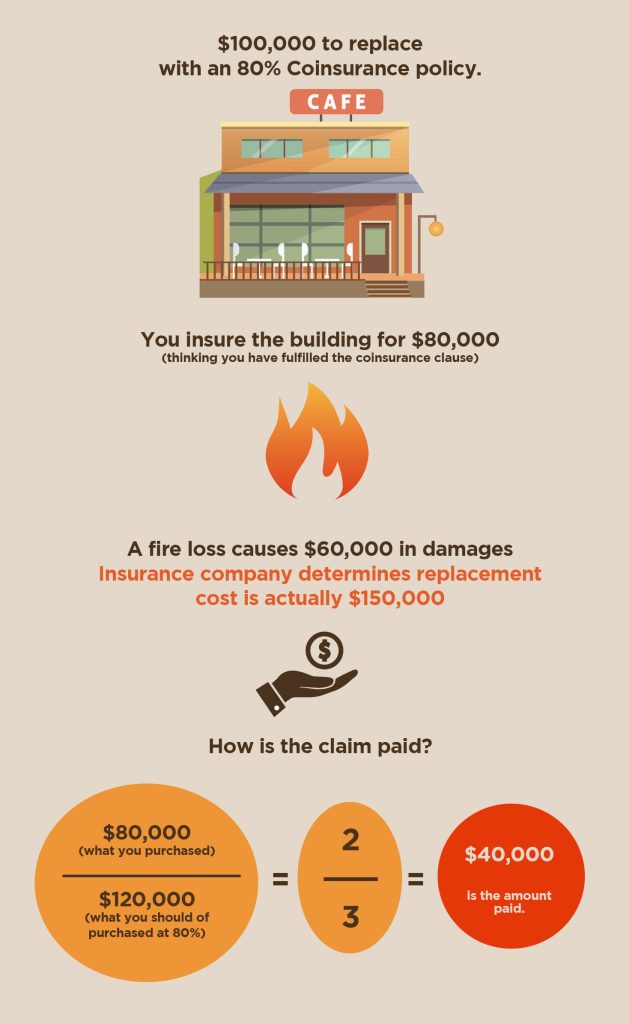
Most property insurance policies contain a coinsurance provision. A coinsurance provision requires the insured to insure the covered property to a specified percentage of it’s full value, typically 80, 90 or 100%. If a loss occurs, and it is determined the limits purchased are less than what is required by the coinsurance clause, the loss recovery will be limited to that same percentage of loss as the ratio of insurance amount carried to the insurance amount.

Coinsurance in a commercial property policy does not come into play until a loss occurs. When this event/loss happens, the replacement cost is assessed at the time of the loss to determine the limit of insurance that should be in place. Depending on the coinsurance percentage selected in the policy, an insured may only have to cover up to a certain amount to avoid a coinsurance penalty.

Example below:

Business Interruption Coverage

Don’t suffer a total loss if your business is forced to close temporarily

A core element to your business owners policy (BOP) is Business Interruption Insurance, or also known as business income insurance. This policy helps you pay bills, replace lost income and cover payroll in the event your business is forced to close temporarily.

Calculating how much business interruption insurance coverage you will need is based on several factors. Not only considering the “worst-case” scenario, such as a fire or total building loss, consider calculating loss of profits and costs to rebuild or relocate. Other things to consider include:
  • How much your business would’ve grown in that time
  • Costs to move or relocate
  • Inventory replacement
  • Costs associated with being in a temporary location, signage, advertising, communication
  • Costs to keep your employees during a downtime or transition
Determining how much coverage you will need is important and what you need covered. Coverage can include:
  • Loss of profits
  • Mortgage or rent replacement
  • Cost of utilities, taxes and advertising
  • Payroll expenses
  • Relocation fees

Business interruption insurance works along side your commercial property insurance providing more than just physical damage coverage. 

Fire isn’t the only “worst-case” scenario, in Texas we are subject to winds, flooding, tornados, vandalism and more. 

It is important you review your policy every year, that you are always covered to the limits you need to keep your business up and running. The professionals at MMIS are ready to help.

How to secure valuable property at home or while traveling

Having homeowners insurance may not be enough to cover items that have a higher value in the case of robbery, loss or damage. It is important that you consider Scheduled Property Coverage if you have concern. Scheduled property coverage is a supplemental insurance policy that extends coverage beyond the standard protection provided in your homeowners’ policy. By adding a scheduled personal property policy, you can ensure the full-value coverage of valuable items, in the event of a claim.

What type of property should I consider?

If you have any of the following property worth more than $1,000 you should consider a scheduled personal property policy:

  • Artwork and paintings
  • Jewelry
  • Furs
  • Silverware
  • Sports equipment
  • Sports memorabilia

How does scheduled property coverage work?

Since replacement costs of a standard homeowners’ policy don’t take into account the value of these items, the replacement value must be established by a third party appraiser. Once a value is agreed upon, the property is covered at an agreed loss settlement cost. 

What does coverage cost?

Coverage costs are based on the items covered and can vary person to person. However the benefits are awesome, with a Nationwide policy you can have world-wide coverage with zero deductible. That means if your traveling and lose your wedding ring your coverage is in place to replace it. For more information contact Mindi McKinley Insurance Services today and we can help you evaluate if this type of policy will be right for you.

Securing your business with Workers’ Compensation coverage

By now you know, Workers’ Compensation is a form of insurance that provides wage replacement and medical benefits to employees that are injured at work, in exchange for the employee’s right to sue for negligence… but did you know Workers Compensation insurance may also help with:

  • An employee who is injured in an auto accident while running errands on behalf of the employer
  • Can help pay for an injured employee’s medical treatment
  • Replace part of an employee’s lost wages if a job-related injury requires time off work
  • Protect your business and assets
  • Most importantly, Workers Compensation can protect the employees of your business.

Your home loves you. Keep it safe.

Your home loves you. Keep it safe.

You should review your policy annually if any of the following changes have occurred. Major life changes can significantly affect your policy.

  • You’ve married or divorced
  • Had a child or adopted
  • Have a live-in in-law
  • Refinanced your home
  • You’ve upgraded appliances
  • You built a swimming pool
  • Or you’ve come into an inheritance

Basic Homeowners Insurance Coverages

​Your Home

Most importantly…protect your home’s structure, built-in appliances or wall-to-wall carpeting from damage.

Your Belongings

Cover your personal property not attached to or built into your home like furniture, jewelry, camera equipment and clothing.

Personal Liability

Protect yourself from an accident that occurs in your home. Damages to someone or something can be covered by a personal liability policy.

Medical Coverage

Your policy can help pay for medical or funeral expenses if someone is injured on your property.

Other Structures

Covers additional structures not attached to your house, such as a shed, fence, barn, detached garage or gazebo.

Credit Card Coverage

Pays up to your selected limit for unauthorized transactions on your credit cards and bank debit/ATM card. Also applies to forged checks and counterfeit money.

Employee Benefits Liability

Don’t let a mistake cost you and your business!

As employers we need to protect our employees and ourselves throughout the entire employment process.

Employee Benefits Liability insurance provides coverage to the employer in the case of errors or omissions in your administration of an employee’s benefit program.

For example, if a new employee requests medical insurance and the employer fails to add the new employee to the plan, then the health insurance company later denies coverage for the employee’s medical claim…the Employee Benefits Liability coverage would pay for the benefits that would have been payable under the health insurance plan but for the employer’s error.

This coverage applies to a wide range of employee benefits including health, life and disability insurance, retirement plans, and other benefits offered through plans administered by the employer.

Garage Keepers Insurance

It’s 3am… Thieves manage to break into your shop and damage several vehicles under your control.

Even with a disclaimer or hold harmless agreement, you will likely have to pay to get them fixed potentially costing you thousands of dollars, unwanted headaches, and lost productivity.

There are a number of things that can go wrong with vehicles under the care and supervision of auto dealerships, repair shops, and garages. Taking measures to avoid exposures and claims will help to strengthen your reputation, trust in your company, and its overall bottom line.

If your company deals with attending, servicing, repairing, parking or storing customer’s vehicle, obtaining a GARAGE KEEPERS LIABILITY insurance is a must to safeguard the financial interest of your business.

This policy can cover work three ways:

  1. Legal Liability. The most common protection applies to a customer’s vehicle damaged due to the insured’s negligence – such as the mechanic wrecked the customer’s car while test driving it or the customer’s vehicle was left unlocked and unattended after hours.
  2. Direct Primary. Coverage of the customer’s vehicles regardless of liability. Loss caused by no action of the insured such as a weather or theft.
  3. Direct Excess. This is the rarest option, although it’s the best. This affords protection to the insured for the loss to a customer’s vehicle regardless of liability.